In today’s technology-driven economy, uninterrupted power is fundamental to commercial success. Businesses rely on consistent electricity to operate machinery, maintain climate control, secure facilities, process transactions, and protect sensitive data. Even a brief power outage can halt productivity, damage equipment, and result in financial losses. For this reason, backup power and generator integration in commercial electrical installations have become a critical component of modern infrastructure planning. Rather than treating backup power as an afterthought, forward-thinking organizations incorporate generator systems into the initial electrical design to ensure reliability, safety, and long-term operational resilience.
Commercial Electrical Installation are far more complex than residential systems. They often involve three-phase power distribution, high-capacity panels, advanced automation controls, and mission-critical equipment. When outages occur—whether due to grid failures, severe weather, or equipment malfunction—the consequences can escalate rapidly. Production lines may shut down, refrigerated inventory may spoil, data systems may crash, and safety systems may become compromised. Properly designed backup power systems mitigate these risks by providing an immediate and seamless transition to alternative energy sources.
Generator integration begins with careful load analysis. Not all building systems require backup power, and oversizing a generator can be unnecessarily expensive. Electrical professionals evaluate essential loads such as emergency lighting, fire protection systems, data centers, HVAC units, and critical manufacturing equipment. By calculating total wattage requirements and anticipated surge loads, designers can determine the appropriate generator capacity. This step ensures that backup power systems meet operational needs without excessive capital investment.
There are several types of generators commonly used in commercial applications, including diesel, natural gas, and propane-powered systems. Each offers distinct advantages in terms of fuel availability, runtime, maintenance requirements, and environmental impact. Diesel generators are often favored for their durability and high power output, while natural gas generators provide a continuous fuel supply through utility lines. Selecting the right generator type requires evaluating factors such as fuel logistics, space constraints, noise considerations, and long-term operational costs.
A critical component of generator integration is the automatic transfer switch (ATS). The ATS monitors incoming utility power and instantly transfers electrical load to the generator when an outage is detected. Once utility power is restored and stabilized, the switch transitions the load back to the primary source. This automatic process ensures minimal disruption to operations and eliminates the need for manual intervention. In environments where even seconds of downtime can cause data loss or safety concerns, the speed and reliability of the transfer switch are paramount.
Commercial installations may also incorporate uninterruptible power supply (UPS) systems alongside generators. While generators typically require several seconds to start and assume full load, UPS systems provide immediate battery-based power to bridge that gap. This layered approach ensures continuous power to sensitive electronics such as servers and communication systems. The integration of UPS and generator systems creates a comprehensive backup strategy that addresses both short-term interruptions and prolonged outages.
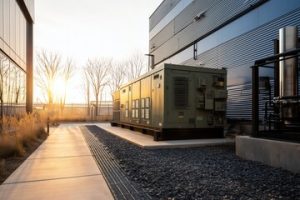
Proper placement and ventilation are essential considerations in generator installation. Generators produce heat and exhaust gases that must be managed safely. Outdoor installations require weather-resistant enclosures, secure mounting, and compliance with clearance standards. Indoor installations demand adequate ventilation and exhaust systems to prevent the accumulation of harmful gases. Electrical contractors coordinate closely with mechanical and structural professionals to ensure safe placement that meets code requirements and operational efficiency.
Routine testing and maintenance are equally important as the initial installation. A generator that is not regularly exercised and inspected may fail when needed most. Scheduled load testing verifies that the system can handle operational demands under real-world conditions. Maintenance tasks typically include checking fuel levels, inspecting filters, testing batteries, and examining electrical connections. Keeping detailed maintenance records ensures compliance with safety standards and provides documentation for insurance purposes.
Effective generator integration involves several key stages:
- Conducting a comprehensive load analysis to determine essential power requirements.
- Selecting the appropriate generator type based on fuel source and operational needs.
- Installing automatic transfer switches for seamless power transitions.
- Integrating UPS systems for uninterrupted protection of sensitive equipment.
- Ensuring proper ventilation, placement, and environmental safeguards.
- Establishing a structured testing and maintenance schedule.
Beyond emergency preparedness, backup power systems enhance overall business continuity planning. Many commercial facilities operate in industries where regulatory compliance mandates emergency power solutions. Healthcare facilities, data centers, financial institutions, and manufacturing plants often require documented backup systems to meet safety and operational standards. Integrating generators into the electrical infrastructure not only satisfies compliance requirements but also reinforces stakeholder confidence.
Scalability is another important factor in commercial generator integration. As businesses expand operations or add new equipment, electrical demand increases. Backup systems should be designed with future growth in mind. Modular generator configurations or expandable distribution systems allow for capacity upgrades without requiring complete replacement. Planning for scalability during the initial installation phase reduces long-term costs and ensures adaptability.
Fuel management strategies also play a crucial role in reliable generator operation. For diesel systems, on-site fuel storage must comply with safety regulations and environmental guidelines. Regular fuel testing prevents contamination and degradation that could impair performance. Natural gas systems, while eliminating the need for storage tanks, depend on an uninterrupted utility supply. Evaluating potential risks associated with fuel availability helps businesses develop contingency plans.
Noise control and environmental considerations are becoming increasingly relevant in commercial installations. Modern generators are available with sound-attenuated enclosures designed to minimize disruption to surrounding environments. Additionally, emissions standards require careful evaluation of generator output and fuel efficiency. Choosing environmentally responsible options supports sustainability initiatives while maintaining compliance with applicable regulations.
Integrating backup power systems also improves operational confidence during peak demand periods. In some cases, businesses use generators not only for emergencies but also for peak shaving—supplementing grid power during high-demand periods to reduce utility costs. This strategy requires precise coordination and monitoring to ensure safe parallel operation with the utility supply. When properly executed, it can yield measurable financial benefits.
Electrical distribution design must accommodate the integration of backup power. Critical circuits are typically separated from non-essential loads, ensuring that generator capacity is reserved for priority systems. Clearly labeled panels and documented single-line diagrams facilitate efficient maintenance and troubleshooting. Professional installation ensures that all connections meet safety codes and manufacturer specifications.
The benefits of backup power and generator integration extend beyond outage protection. Businesses gain operational resilience, enhanced safety, and reduced liability exposure. Employees can continue working during grid disruptions, protecting productivity and revenue streams. Sensitive data remains secure, and critical processes continue without interruption. In industries where downtime translates directly into financial loss, backup systems serve as a safeguard against reputational damage.
There are several strategic advantages to integrating generators into commercial electrical installations:
- Protection against revenue loss caused by power outages.
- Enhanced safety through continuous operation of emergency systems.
- Improved compliance with regulatory and insurance requirements.
- Increased resilience against grid instability and extreme weather events.
- Greater operational flexibility and scalability.
- Potential cost savings through peak demand management strategies.
Implementing a comprehensive backup power solution requires collaboration between electrical engineers, contractors, and facility managers. From initial assessment to final commissioning, every stage must prioritize safety, performance, and code compliance. Detailed planning ensures that generator systems integrate seamlessly with existing infrastructure while supporting future growth.
In conclusion, backup power and generator integration in commercial electrical installations is a critical investment in operational stability and risk management. Through careful load analysis, strategic equipment selection, seamless transfer mechanisms, and structured maintenance programs, businesses can safeguard their operations against unexpected disruptions. As commercial environments grow increasingly dependent on reliable electricity, integrating robust backup systems becomes not only a practical necessity but a competitive advantage. By prioritizing resilience and proactive planning, organizations position themselves to maintain productivity, protect assets, and thrive even in the face of power uncertainty.